Biomonitoring NY - Neighborhoods

New York State Department of Health hosted sample collection events throughout 2025 and 2026 for Biomonitoring NY – Neighborhoods. Now that sample collection is complete, the Department is planning to host follow-up educational events in Albany, Poughkeepsie, Rochester, Ellenville, Gloversville/Amsterdam, Ogdensburg/Massena, and Syracuse.
Biomonitoring NY – Neighborhoods is focused on New York State rural and urban communities that were underrepresented in our previous Biomonitoring NY efforts. The Department is partnering with community groups to host local events that help residents learn more about chemicals in their bodies and how to reduce exposure to harmful substances like PFAS, pesticides, and heavy metals. Biomonitoring NY - Neighborhoods is funded by the Centers for Disease Control and Prevention (CDC).
Check in here to see when we will be holding follow-up educational events where previous study participants can talk with Department staff about their individual results. All community members are welcome to attend these events to learn about community level results and get tips on how to reduce exposures to chemicals in everyday life.
Biomonitoring NY - Neighborhoods Communities
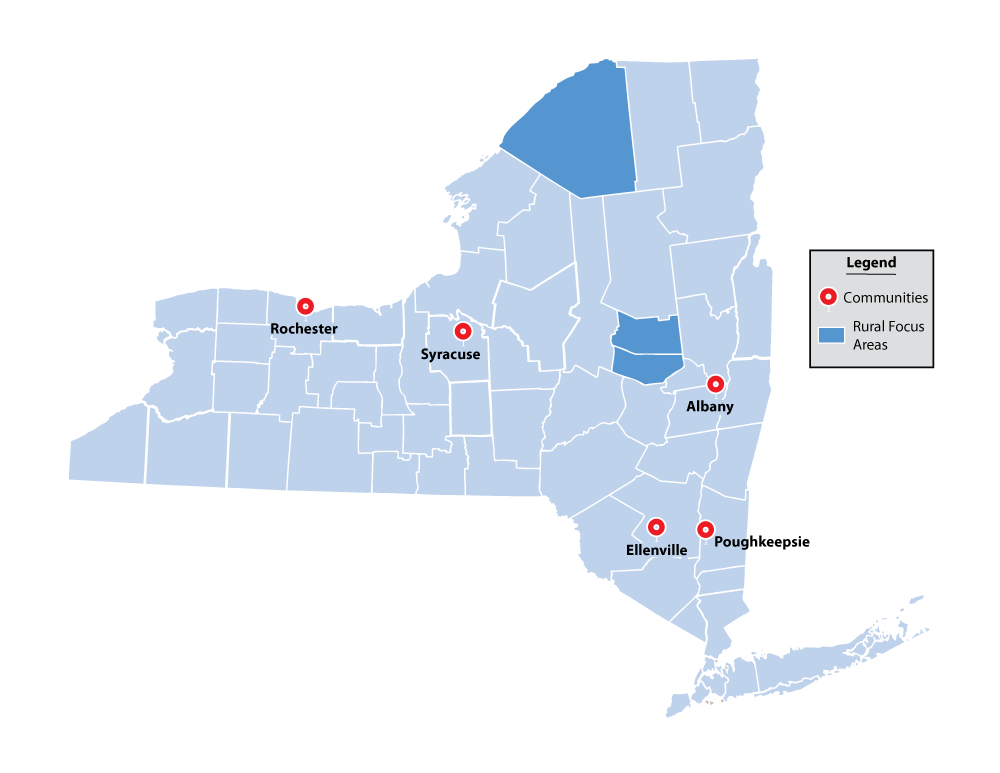
| Recruitment Area | Samples Collected | Sample Collection Status |
|---|---|---|
| City of Albany | 201 | Complete |
| City of Poughkeepsie | 146 | Complete |
| City of Rochester | 322 | Complete |
| City of Syracuse | 230 | Complete |
| Village of Ellenville | 75 | Complete |
| Gloversville & Amsterdam | 166 | Complete |
| Ogdensburg & Massena | 108 | Complete |
| Total | 1,248 |
Participants who attended our sample collection events:
- Were at least 20 years old.
- Completed a consent form and filled out a participant survey about themselves and their household.
- Provided blood and urine samples, which were be tested for PFAS, pesticides, and metals.
- Received a $75 gift card.
We did not test for medication or drug use or analyze DNA or genes.
Blood samples collected will be tested for 11 PFAS, and metals such as cadmium, chromium, cobalt, lead, manganese, mercury, and selenium. Urine samples will be tested for pesticides; organophosphates, phenoxy acids, and pyrethroids, and metals (arsenic, barium, beryllium, cadmium, cesium, chromium, cobalt, lead, manganese, mercury, molybdenum, platinum, selenium, tin, thallium, tungsten, and uranium).
- PFAS are a large group of man-made chemicals that have been used in a wide range of industries. They can be found in consumer products such as food packaging, stain and water repellents, cleaning products, personal care products and paints; as well as in firefighting foam. PFAS are widely found in the environment and can stay in the human body for years.
- Pesticides are substances used to kill, repel, or control pests such as unwanted plants or animals. Pesticides include herbicides for destroying weeds and other unwanted vegetation. Insecticides are used to control insects, and fungicides are used to prevent the growth of molds and mildew. Because of the widespread use of agricultural chemicals in food production, people are exposed to low levels of pesticide residues through their diets.
- Heavy metals such as mercury, lead and cadmium are linked to harmful health effects. They can build up in the body as a result of industrial exposure, air or water pollution, food, improperly coated food containers, or by ingesting lead-based paints.
How Will Participants Get Their Results?
Blood and urine test results will be shared with participants after they are analyzed by the New York State Department of Health’s Wadsworth Center Laboratory. Participants’ results will also be available at follow-up educational events. It may take several months for participants to receive results due to the number of chemicals and metals being tested in each sample. We recommend that participants discuss their biomonitoring results and individual health concerns with their health care providers. Group-level results will also be presented in scientific publications, reports, and presentations. Confidentiality is protected so that individual participants cannot be identified.
More Information
Please contact the Biomonitoring NY Project Coordinator: Phone 518-402-7950, Email BEOE@health.ny.gov
