Cold Weather Tips
Translate this page into other languages:
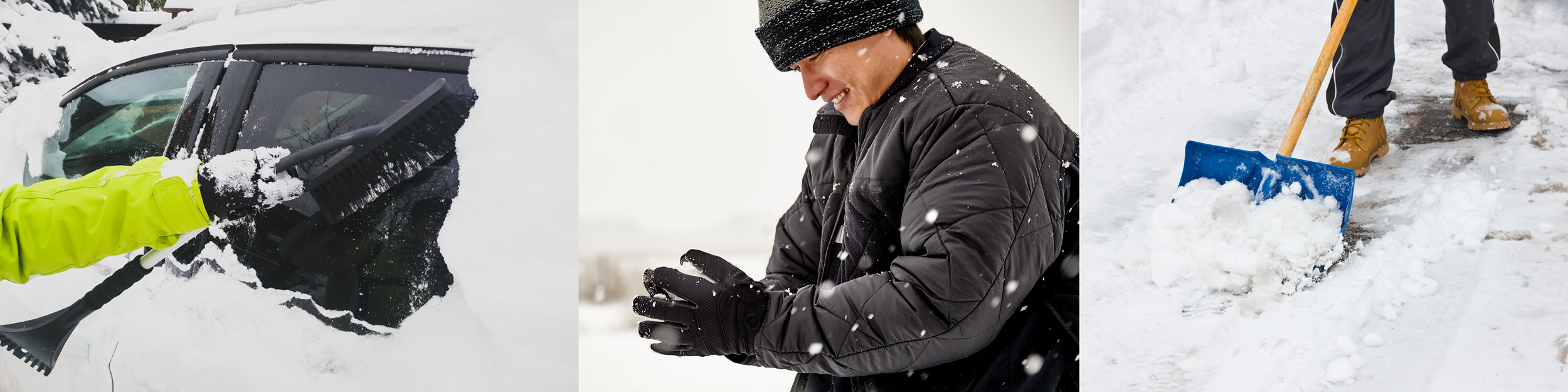
Bundle Up Outdoors
- Hypothermia and frostbite are emergency medical conditions. Hypothermia occurs when your body drops below 95°F, and frostbite occurs when your body tissue freezes. If you will be spending time outside, do not ignore shivering. Shivering is an important sign that your body is losing heat and a signal to quickly return indoors. In high wind conditions, cold weather-related health problems are much more likely.
- Reduce your health risks by dressing in warm clothing that covers your body, head, and hands. Be sure to layer clothing with an outer layer that reduces body-heat loss caused by wind.
- Cold weather also puts an extra burden on the heart. If you have heart problems or high blood pressure, follow your healthcare providers' advice about shoveling or performing any strenuous exercise or work outside. Even healthy adults should remember that their bodies already are working overtime just to stay warm. Dress appropriately and work slowly when doing heavy outdoor chores.
Heating Your Home Safely
- Keep indoor temperatures between 64 and 75°F and above 68°F to protect the very young, the elderly, or people with health problems.
- All space heaters can cause fires and should be used by carefully following manufacturers instructions.
- Keep the heat on and set no lower than 55°F. Avoid pipes freezing by allowing faucets to drip when indoor temperatures are low. Open cabinet doors to allow more heat to get to uninsulated pipes under a sink or appliance near an outer wall. Never use an open flame or torch to thaw frozen pipes.
- If pipes burst, avoid standing water to avoid electric shock.
Reduce Risk of Carbon Monoxide Poisoning
Carbon monoxide (CO) is a deadly gas. It is colorless, odorless, tasteless and non-irritating. It is produced by burning fuels such as wood, oil, natural gas, kerosene, coal and gasoline.
- Make sure you have a working carbon monoxide detector in your home.
- Run generators far away from buildings.
- Never use ovens to heat your home.
- Use outdoor grills and cooking appliances outside only and not in enclosed spaces, car ports, or covered porches.
- Start and run gasoline-powered snow blowers away from buildings.
- Make sure your stove or a fireplace is properly installed and vented.
- Never run your vehicle in a garage.
- Schedule annual maintenance for furnaces and other heat sources.
Indoor Temperature Complaints
If your home or workplace is too cold, discuss the problem with the building owner or maintenance staff. Different protections may apply depending on the space is involved.
- For rented homes, apartments, or businesses below 68°F, call your local building department.
- For classrooms below 65°F, call the New York State Education Department at (518) 474-3906.
- For daycares below 68°F, call (800) 732-5207.
- For residence areas in nursing homes (rooms, dining hall, activity areas, etc.) that are not maintained at a comfortable level, call the New York State Department of Health Division of Quality and Surveillance for Nursing Homes at (518) 408-1282.
Help with Heating Bills and Energy Costs
- If you are having trouble paying your winter energy bills contact the New York State Home Energy Assistance Program (HEAP),and look up your local HEAP office.
- For energy efficiency information to reduce heating bills, contact the Weatherization Assistance Program (WAP), 1-866-ASK-DHCR (1-866-275-3427).
- For more information about energy efficient products:
More Information
- Warm, lower cost clothing may be available from local charities and thrift stores.
- Search the web for local"charities" to find a listing of the organizations in your area that may be able to help with everything from clothes to food to weatherization services to other support.
- Video: Preparing for Winter Weather (youtube.com)
- Video: Stay Warm—Avoid Frostbite and Hypothermia (Youtube.com)
- Visit Weather Emergencies: Storms, Floods, and Power Outages. The booklet "Don't Be left in the Dark – Weathering Floods, Storms and Power Outages" also has a lot of information about preparing for weather emergencies, getting through them and recovering after the event.
- The Occupational Safety & Health Administration provides information on Worker Safety during winter storms.
