New York State Wastewater Surveillance
What is Wastewater Surveillance?
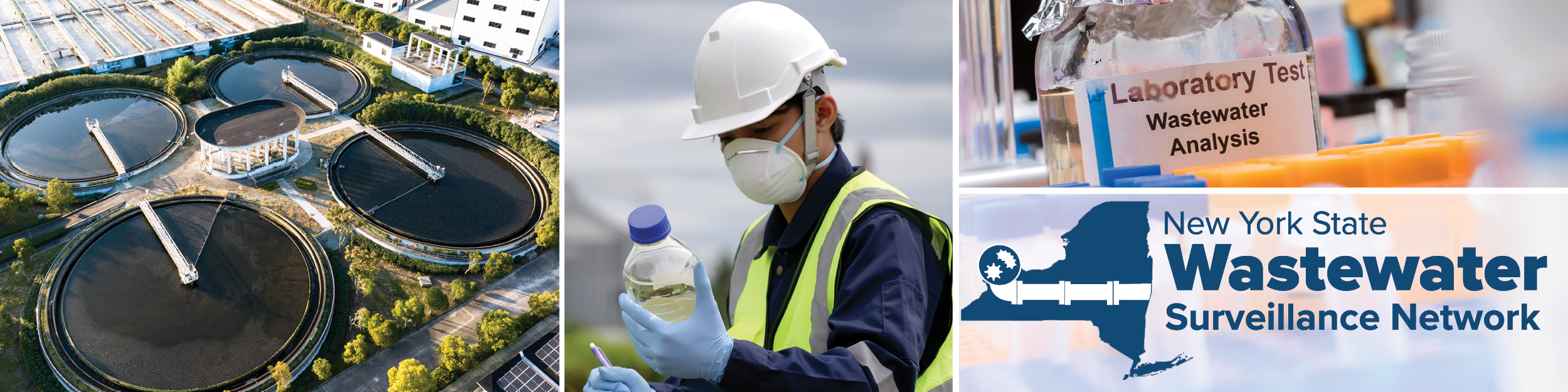
The New York State Wastewater Surveillance Network tests sewage entering wastewater treatment plants before it is cleaned and disinfected. Public health professionals use these results to help evaluate if certain infectious diseases, pathogens, or chemicals are circulating in communities.
Wastewater is made up of water and sewage that runs down the drain. It contains human and animal waste, including viruses and bacteria from urine and feces. Wastewater can also contain pharmaceuticals, personal care products, and chemicals.
Quick Links
View Our Dashboard
Our dashboard reports COVID-19, RSV, influenza (flu), and measles in wastewater across New York State. Our measles report is published weekly.
Wastewater Surveillance in Action
Wastewater surveillance requires collaboration across programs. Learn more about what we are testing.
Reports and Briefs
Learn more about our impact in public health response. View our annual report, fact sheets, and technical briefs.
New York State Center of Excellence
We collaborate with Syracuse University to support wastewater surveillance programs in eight U.S. states and two territories.
Recent Publications
Explore our team’s latest contributions to the field of wastewater surveillance.
Watch Our Videos
Learn about the process of wastewater surveillance and how it helps protect your community and your privacy.
Communications Resources
Our communications toolkit provides our Center of Excellence jurisdictions with planning tools and templates.
Events and Trainings
View our upcoming trainings, events, and courses.
Resources
View wastewater surveillance resources for the general public, health practitioners, wastewater treatment plant operators, and researchers.
Key Takeaways
- Wastewater surveillance provides a better understanding of illnesses in a community without relying on people having symptoms, getting tested or any personal information.
- Wastewater surveillance protects people’s privacy. Wastewater testing results cannot be tracked back to individuals or households because samples are collected at community wastewater treatment plants, not from people’s homes. Each sample represents the group of people who are served by that treatment plant. This method ensures individual privacy.
- Wastewater surveillance is not a substitute for getting tested for illnesses. People who have been exposed to illnesses follow a health care provider's recommendations for necessary appropriate clinical test tests.
How Wastewater Surveillance Works
Wastewater surveillance begins with viruses and bacteria entering sewers. Wastewater operators, laboratory staff, and public health officials work together to collect, test, and analyze wastewater to inform public health response. Learn more about this process below or view our infographic.
Viruses and Bacteria Enter Sewers

Sick people shed viruses and bacteria when they wash hands, shower, or use the bathroom. These run down the drain and into the sewers.
Wastewater Travels to the Treatment Plant

Community waste is mixed in sewers on the way to the wastewater treatment plant.
Operators Collect Samples

Before wastewater is cleaned and disinfected, operators take samples and send them to a laboratory.
Laboratory Staff Analyze Samples

Laboratories test samples for disease-causing viruses and bacteria, and report results to public health officials.
Public Health Officials Monitor and Share Data

Public health officials analyze reports, track trends, and recommend public health actions to prevent illness.
People Use Wastewater Data to Understand Risks

People make choices to reduce their risk of getting sick, such as getting vaccinated, washing hands often, avoiding people who are sick, and wearing a mask in crowded places.
About the New York State Wastewater Surveillance Network
New York State Department of Health’s Center for Environmental Health and Wadsworth Center lead the Wastewater Surveillance Network in partnership with Syracuse University. Other partners include University at Buffalo, Stony Brook University, University at Rochester, New York Medical College, SUNY Upstate Medical University, and New York City Department of Health and Mental Hygiene.
