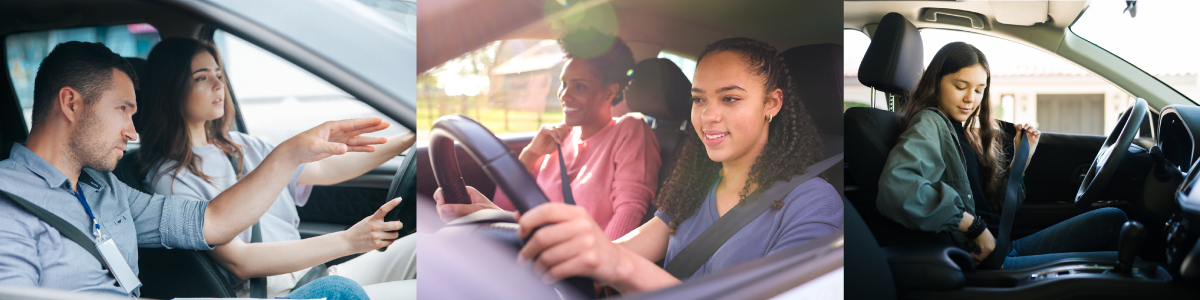
Younger Driver Safety
Younger drivers ages 16-20 are more likely to be involved in a crash than other drivers. The leading causes of fatal crashes involving younger drivers include speeding, driving too fast for road conditions, inexperience, distractions and driving while drowsy or impaired. Help your young driver learn the risks and practice safe driving.
Safety Tips
- Know the rules of the road and New York State traffic laws. Pay special attention to laws that apply to younger drivers.
- Enroll younger drivers in a driver education course to help them gain experience, recognize hazardous or dangerous situations, and learn how to respond. New drivers are required by New York State law to complete at least 50 hours of supervised driving, including 15 hours at night, before taking their road test.
- Spend time supervising the younger driving to ensure they know how to safely operate a vehicle and follow traffic safety laws.
- Remind the younger driver to always buckle up. Lead by example!
- Avoid driving at night, for long periods of time, or in bad weather.
- Follow the speed limit. Drive slow in poor road conditions to maintain control.
- Never drive drowsy, distracted, or impaired.
- Never text and drive.
- Explain exactly what to do in the event of an emergency, such as a flat tire or engine trouble.
- You can withdraw your teen's driver's license by completing a Withdrawal of Consent form if your younger driver is under 18 and has a junior license.
Risk Factors
Speed is the leading contributing factor of crashes that result in serious and fatal injuries for younger drivers, followed by driver inexperience, failure to yield, and driver distraction.
- Driver inexperience
- Driving drowsy, distracted, or impaired
- Driving unbuckled
- Driving at unsafe speeds
Managing Your Teen's Driving
New York State Graduated Driver Licensing Law (GDL)
These guides describe New York State Graduated Driver Licensing Law (GDL) restrictions for junior permit and junior license holders based off of where they drive.
When They are Ready to Drive
Younger drivers are safest when driving with an adult. They are most at risk for a crash during the first six months of unsupervised driving. Allow your younger driver to drive independently when there has been adequate driving experience.
Guidance for Younger Drivers:
- Make sure your younger driver will avoid taking risks, especially if pressured by friends.
- Guarantee your younger driver will buckle up every time and all passengers do so as well.
- Be sure your younger driver is ready for the responsibility of driving alone.
- Teach your younger driver to be patient with other drivers.
- Be aware of the leading causes of crashes involving younger drivers and how to avoid them.
- Follow driving rules and conditions.
- Be sure to feel confident about your younger driver’s skills
Parent-Teen Driving Agreement
One of the most important things parents/caregivers can do to reduce younger driver’s crash risks is to limit driving under high-risk conditions. A written parent/teen driving agreement can help you and your younger driver set driving rules. Refer to sample contracts from the Department of Motor Vehicles or Governor's Traffic Safety Committee. The driving agreement should include:
- Driving restrictions, such as placing limits on nighttime driving and the number of passengers allowed to ride with your younger driver. Make sure your younger driver is following New York State Graduated License Laws and Restrictions.
- Driving rules and laws, such as always wearing a seat belt, obeying traffic safety laws, and not using a cell phone while driving. Other rules may address curfews, use and maintenance of the car, or maintaining good grades in school.
- Driving conditions, such as having your younger driver let you know where they are going, who they are with, and when they will return from each driving trip. Your younger driver should know what to do or how to contact you if their plans change.
- Consequences for breaking the driving agreement. These might include taking away driving privileges for a certain amount of time. It is important to follow through with consequences when the agreement is broken to ensure its success.
Choosing a Safe Vehicle
Before making the commitment to get your younger driver a vehicle, determine if your younger driver is ready for this adult responsibility. Consider waiting at least six months to get your younger driver a vehicle, as newly licensed younger drivers are at highest risk of being involved in a crash during this time. This will allow your younger driver time to gain more driving experience under safer circumstances while using the household vehicle. Younger drivers who have their own vehicle are also more likely to use cell phones while driving, speed, and be involved in crashes more than younger drivers who share a vehicle with other household drivers.
Consider the following safety:
- Size of the car. Newer, mid- and full-size passenger cars are better choices due to their size and safety features. However, Sport Utility Vehicles (SUVs) and pick-up trucks are more likely to roll over in a crash.
- Safety features. Side airbags add extra protection for the driver and passengers. Consider vehicles with electronic stability control, anti-lock braking and seat belt reminder systems.
- Safety ratings. Look up information for the car's safety ratings.
Related Information