Staying Informed
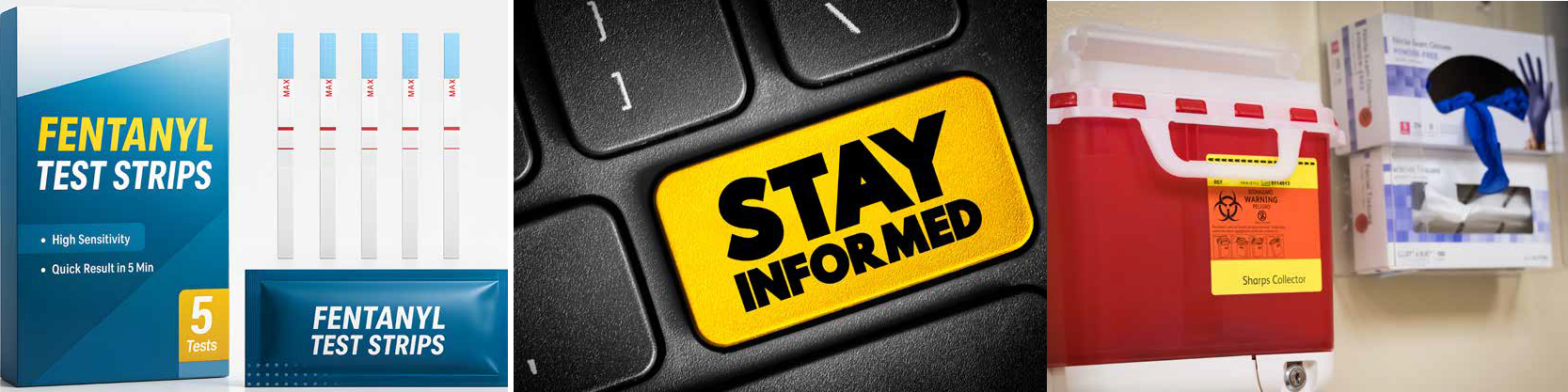
The New York State Department of Health arms New Yorkers with tools and information to stay safe from emerging drug supply threats. On this page, you can:
- Read about how the New York State Department of Health gets the word out about emerging drug supply threats;
- Find a drug checking program near you;
- Order free drug test strips, and;
- Learn about the New York State Department of Health's bio surveillance work.
What's in the street drug supply? How can people stay safe from new threats?
Drugs are a mix of different chemicals, some of which are psychoactive and others that are filler and added to bulk up the package. When new substances are added to the mixture, those substances can increase the risk of overdose or harm.
The New York State Department of Health tracks emerging drug threats to help keep communities safe. Through public health alerts about emerging threats, drug checking data, and other early warning systems, the Department shares timely information about new and dangerous substances found in New York State.
- Find the latest drug supply health alerts
Drug checking
Drug checking is a service where trained technicians test a small sample of a substance to find out what it really contains, so that people can make safer choices about their drug use.
Information from drug checking helps health workers understand changes in the local drug supply, improve care, and shape policies that save lives.
There are authorized Drug Checking Programs across the state: Find a drug checking program near you.
To see what's in New York's drug supply, see our drug checking data.
Test strips
Test strips are a great tool to quickly and easily check drugs for the presence of dangerous additives like fentanyl, xylazine, and other substances. Test strips can alert people to hidden risks before using a drug. This helps them make safer choices and prevent overdoses.
You can order free test strips and have them delivered to quickly check for the presence of fentanyl, xylazine, and other substances in your drugs.
- How to Use Fentanyl Test Strips (English)
Bio surveillance
When someone is treated for an overdose at a hospital, information may be collected through a urine sample to learn which substances the person has taken. This helps health officials understand what substances – additives and contaminants - are circulating in the community so emergency response can be better prepared.
New York shares biosurveillance data with the CDC every three (3) months. The CDC reviews the information to track national drug use trends and changes over time.
Biosurveillance data, combined with demographics information like age and location, helps identify which groups are most at risk and what substances are causing overdoses. Advanced lab testing also helps detect new and emerging drug threats early.
