Stroke
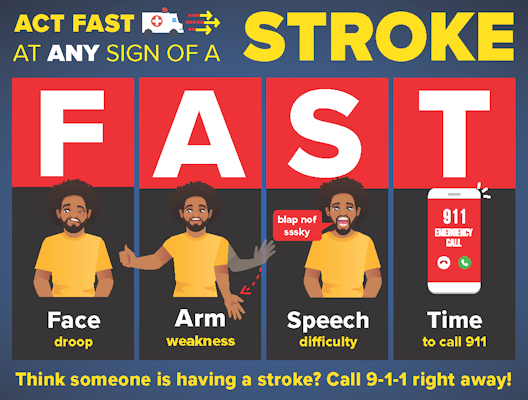
Think someone is having a stroke? Call 9-1-1 right away!
Treatment needs to be given FAST. It can lower a person's risk of dying.
A stroke is an emergency. It's sometimes called a brain attack.
The brain starts to die because it is not getting oxygen.
What is a Stroke?
A stroke happens when oxygen-carrying blood is blocked from reaching the brain. Brain cells begin to die. All strokes are sudden.
There are 2 types of stroke. Each type blocks oxygen from reaching the brain differently.
- Ischemic (is-skeem-ic): A blood clot blocks a blood vessel in the brain. The American Stroke Association says 87% of all strokes are ischemic.
- Hemorrhagic (hem-or-ah-jick): A blood vessel bursts and leaks blood into the brain.
Transient Ischemic Attacks (TIAs) or "Mini strokes", occur when symptoms last for a short time. TIAs are still a medical emergency. They are also a warning sign of a future stroke.
Strokes can be treated but every minute counts. Call 9-1-1 at the first sign of a stroke. As of 2021, stroke is the fifth leading cause of death nationally and sixth leading cause of death in New York State. Strokes are also a cause of major disability.
The New York State Health Department oversees more than 100 stroke centers. They make sure the centers are highly trained to identify and treat stroke patients.
Signs and Symptoms of Stroke
All major stroke symptoms appear suddenly, without warning. stroke damages the brain. someone may not know they're having a stroke. It's important to know the signs of stroke and call 9-1-1 right away. Even if a stroke does not cause pain, it should still be taken seriously and taken care of at once!
"FAST" can help you recall stroke's most common signs and symptoms.
- F = Face: Ask the person to smile. Does one side of their face droop?
- A = Arm: Can the person raise both arms? Does one arm drift down? Is their arm weak?
- S = Speech: Ask the person to repeat a simple phrase. Is their speech slurred or confusing?
- T = Time: Time is critical. Very important: Note the time when stroke symptoms first appear. Call 9-1-1 right away. Anyone who may be having a stroke should have EMS transport them to the hospital.
Do you have any of these symptoms? Does someone near you? Call 9-1-1 now!
More Signs of a Stroke. They all Happen Suddenly:
- Numb or weak face, arm, or leg. Mostly on one side.
- Trouble seeing with one or both eyes.
- Trouble speaking.
- Confusion or trouble understanding other people.
- Dizziness.
- Loss of balance or coordination, or trouble walking.
- Severe headache – comes on for no reason.
Are You at Risk?
You can reduce your risk of having a stroke. Talk to your health care provider about:
Lifestyle & Medical Risk Factors:
- High Blood Pressure, or Hypertension. This raises the risk for stroke more than anything else. Ask how you can lower your blood pressure.
- High Cholesterol. Work with your health care provider to manage and control your cholesterol.
- Smoking. Avoid smoking or quit. Work with your health care provider to successfully quit smoking.
- Obesity. Eat in a healthy way and get regular physical activity.
- Diabetes. Work with your health care provider to manage and control your diabetes.
Demographic Factors:
- Age. Although stoke can happen at any age, people over 55 have a higher risk of stroke than younger people.
- Sex. Men are more likely to have a stroke than women. However, women are more likely to die of stroke than men.
- Race. Hispanic and African Americans are at a higher risk of stroke than people of other races.
Treatment
After you call 9-1-1, treatment will start right away. An Emergency Medical Services (EMS) provider will arrive and assess what type of stroke you're having while beginning treatment on the way to the hospital.
EMS providers are a critical part of the stroke team. They receive special training to quickly identify strokes. They take patients to the nearest hospital or stroke center. EMS first calls ahead to allow hospitals to prepare. This way the hospital can treat stroke patients as fast as possible.
Once at the hospital, the emergency department team will obtain imaging of your brain, likely using a CT scan, to rule out any other possible causes of your symptoms. A neurologists or other qualified medical professional will then discuss treatment options.
Common Treatments
Thrombolytic therapy is commonly used to treat strokes by stopping blood clots. Time-sensitive medicines called IV thrombolytics, can dissolve a blood clot. A health care provider may give this type of medicine soon after stroke symptoms appear. It allows blood and oxygen to flow to the brain. The sooner IV thrombolytics are given, the better. It will raise the patient's chances for a full recovery.
Another way to treat a stroke is to remove or dissolve the blood clot using a catheter in what's known as mechanical thrombectomy. This should be done soon after stroke symptoms appear. First, a "catheter" or thin tube is put in an artery in the patient's leg or arm. Next, the tube travels to the brain where a "stent", or wire cage, grabs the clot and removes it. In some cases, the catheter is sent to the source of the bleeding where it drops an item like a "coil," or tiny spirals of wire, at that spot. In some cases, this prevents the blood vessel from breaking again. thrombectomy can reduce the risk of severe disability or death by restoring blood flow quickly.
