What is rabies?
Rabies is a deadly disease caused by a virus that attacks the central nervous system (brain and spinal cord). Infected mammals can transmit rabies virus to humans and other mammals. Rabies almost always causes death once symptoms appear, but rabies can be prevented if treatment is given soon after exposure to a rabid animal.
What animals can get rabies?
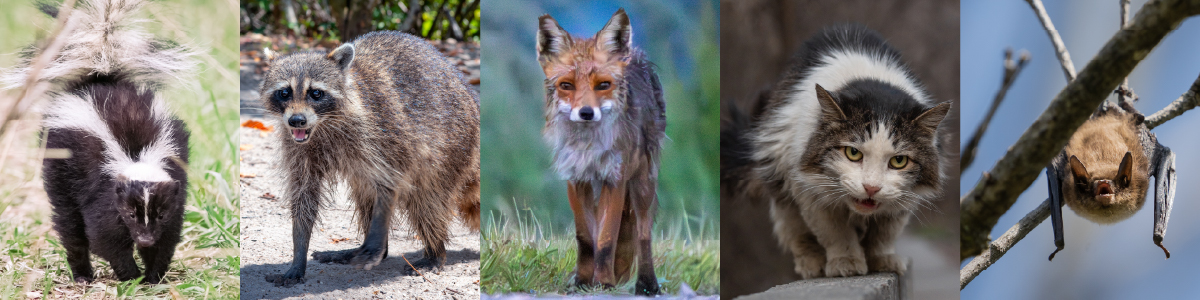
Rabies is most often seen among wild animals such as raccoons, bats, skunks, and foxes, but any mammal can be infected with rabies. Pets and livestock can get rabies if they are not vaccinated to protect them against infection. Among domestic animals, cats are most frequently diagnosed with rabies in New York State.
Some animals almost never get rabies. These include rabbits and small rodents such as squirrels, chipmunks, rats, mice, guinea pigs, gerbils, and hamsters. It is possible for these animals to get rabies, but only in rare circumstances, such as if they are attacked but not killed by a rabid animal.
Reptiles (such as lizards and snakes), amphibians (like frogs), birds, fish, and insects do not get or carry rabies.
What are the signs of rabies in animals?
The first sign of rabies is usually a change in an animal's behavior. It may become unusually aggressive or tame. The animal may lose its fear of people and natural enemies. A wild animal may appear affectionate and friendly. It may become excited or irritable and attack anything in its path. Staggering, convulsions, choking, frothing at the mouth, and paralysis are sometimes seen. Some animals will make very unusual sounds. Infected animals usually die within one week after showing signs of rabies.
If you see an animal acting abnormally, and you are concerned you may have been exposed to rabies, contact your local health department. They will be able to help you determine if you have been exposed and what to do next.
How do people become exposed to rabies?
People usually get exposed to the rabies virus when an infected animal bites them. Exposure may also occur if saliva from a rabid animal enters an open cut or mucous membrane (eyes, nose, or mouth).
What should I do if I think I was exposed to rabies?
Wash all wounds thoroughly with soap and water and seek medical attention immediately.
Report all animal bites to your county health department, even if you are unsure whether or not you have been exposed. The phone number for your county health department can be found on the New York State Department of Health website.
Try to keep track of the animal that you had exposure to and report this information to your county health department so the animal can be captured safely, if possible. In the case of a bat, you may be able to safely capture it yourself and take it to your county health department where it will be transferred to the state for rabies testing if the health department determines that it may have exposed you to rabies.
Watch this video to learn how to capture a bat safely
Healthy dogs, cats, ferrets, and livestock that have been bitten or otherwise potentially exposed a human to rabies need to be confined under the direction of the county health department and observed for ten days following the exposure. If the animal remains healthy during this period, the animal did not transmit rabies at the time of the bite.
Other types of animals that potentially expose humans to rabies must be tested for rabies under the direction of the county health department. If an animal cannot be observed or tested for rabies, rabies postexposure treatment may be necessary for the people exposed. Your county health department will assist you and your physician to determine whether such treatment is necessary.
What is the treatment for people exposed to rabies?
Treatment after rabies exposure is called rabies postexposure prophylaxis (RPEP). It consists of a dose of human rabies immune globulin (HRIG) given as soon as possible after exposure, plus 4 shots of rabies vaccine given over two weeks. If there is a wound or known site of animal contact, the full dose of HRIG should go into the wound or site of contact, if possible. The first vaccine shot is given at the same time, with the remaining shots given on days 3, 7, and 14 following the initial injection. People who have weakened immune systems may require a fifth rabies shot if their doctor determines it is necessary.
A person who has already been vaccinated for rabies and is exposed to rabies must receive two booster vaccine shots three days apart immediately after exposure. They do not need a shot of HRIG.
What happens if a rabies exposure goes untreated?
Exposure to a rabid animal does not always result in rabies. If treatment (RPEP) is initiated promptly following a rabies exposure, rabies can be prevented. If a rabies exposure is not treated and a person develops clinical signs of rabies, the disease almost always results in death.
Do people and animals die from rabies?
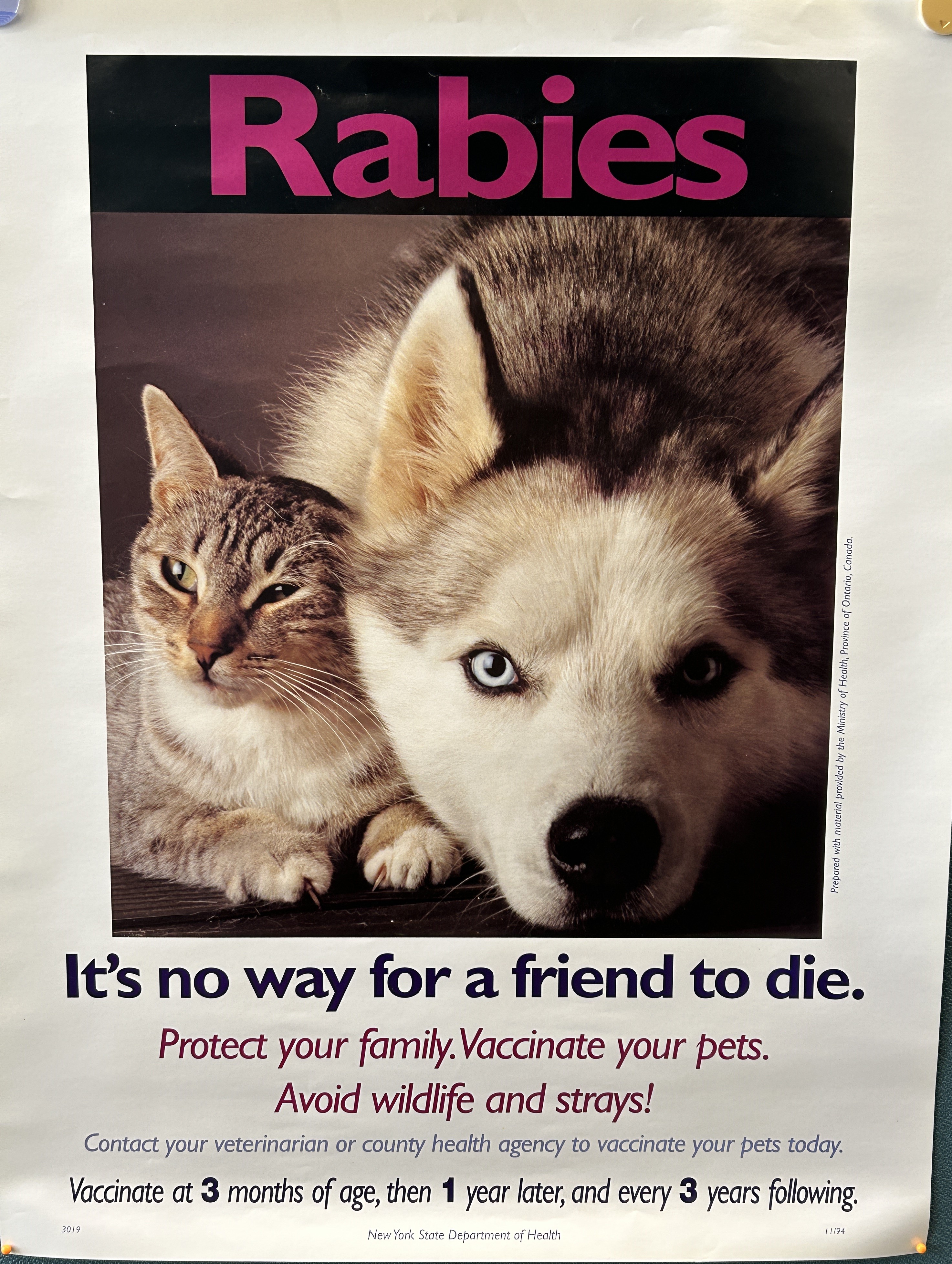
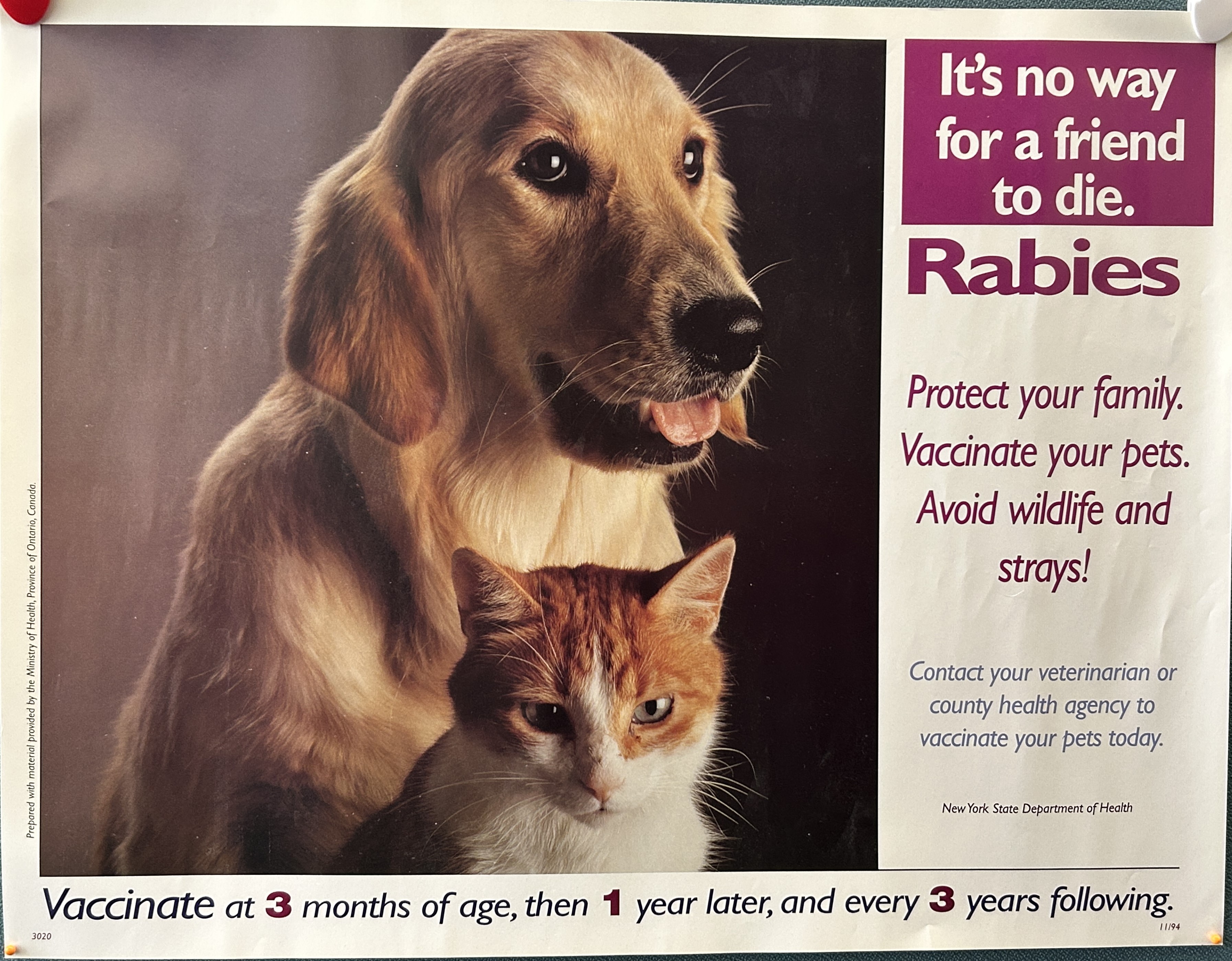
Once symptoms appear, people and animals almost always die. The time period from when a person is exposed to rabies until they begin to develop symptoms is called the incubation period. Incubation can take from two weeks to several months. Once symptoms of rabies start, treatment does not usually work. This is why it is very important to get treated with vaccine right after you are exposed to rabies and vaccinate your pets for rabies. Getting vaccinated can keep you from getting rabies.
How do I protect my pets from rabies?
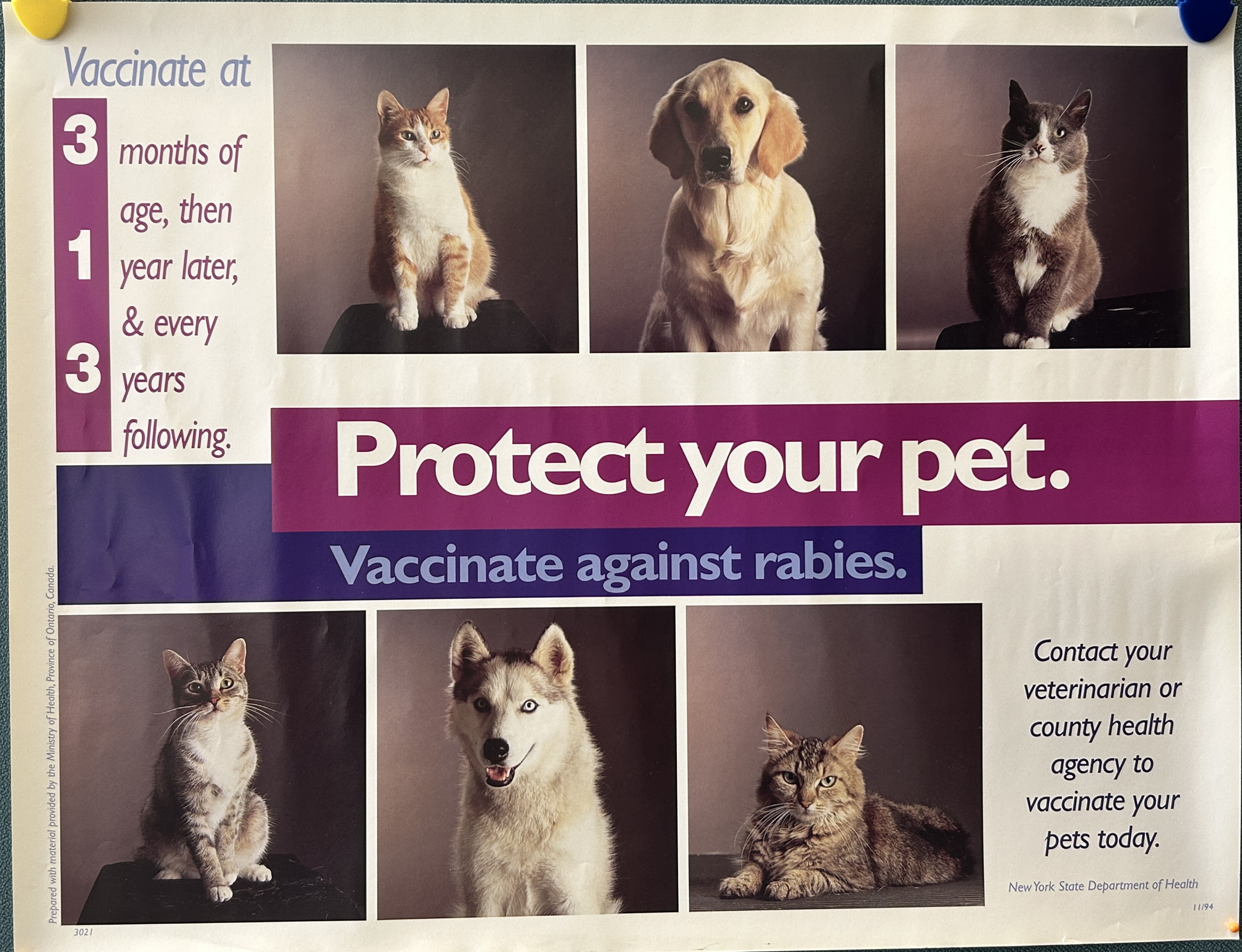
The best way to keep pets safe from rabies is to vaccinate them and keep their shots up to date. If your pet has been injured by a rabid animal, contact your veterinarian to get medical care. Even though your pet has been vaccinated, it may need a booster dose of rabies vaccine within five days of the incident. Contact your county health department to determine what additional follow-up may be needed.
Where can I get more information about rabies?