Can You Eat that Fish From Onondaga Lake?
Translations
Can You Eat that Fish from Onondaga Lake?
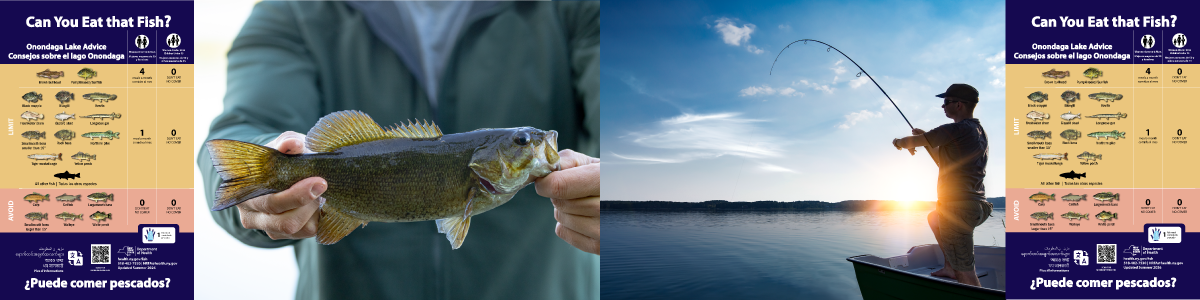
Fish are nutritious and good to eat, but many fish in the Onondaga Lake have levels of chemicals that may be harmful to your health. This includes PCBs (polychlorinated biphenyls), mercury, dioxins, and PFAS (per- and polyfluoroalkyl substances). Even if the fish look healthy and the water looks clean, these chemicals are present in Onondaga Lake fish, including popular species like bass, yellow perch, and walleye.
The New York State Department of Health provides health advice for eating fish you catch from New York State waterbodies, including the Onondaga Lake. The advice helps anglers make healthier choices about eating fish.
- The Sensitive Population (people who may become pregnant under 50 years old and children under 15) should not eat any fish from Onondaga Lake. Fish in this lake contain higher levels of chemicals which can be more harmful to young children and unborn babies. Use the links below to find other nearby waterbodies to eat the fish you catch, including Oneida Lake.
- The advice for the General Population (everyone else) depends on what type of fish you catch. Use the links below to find the advice for Onondaga Lake.
Onondaga Lake Advice
Click to view a larger image.
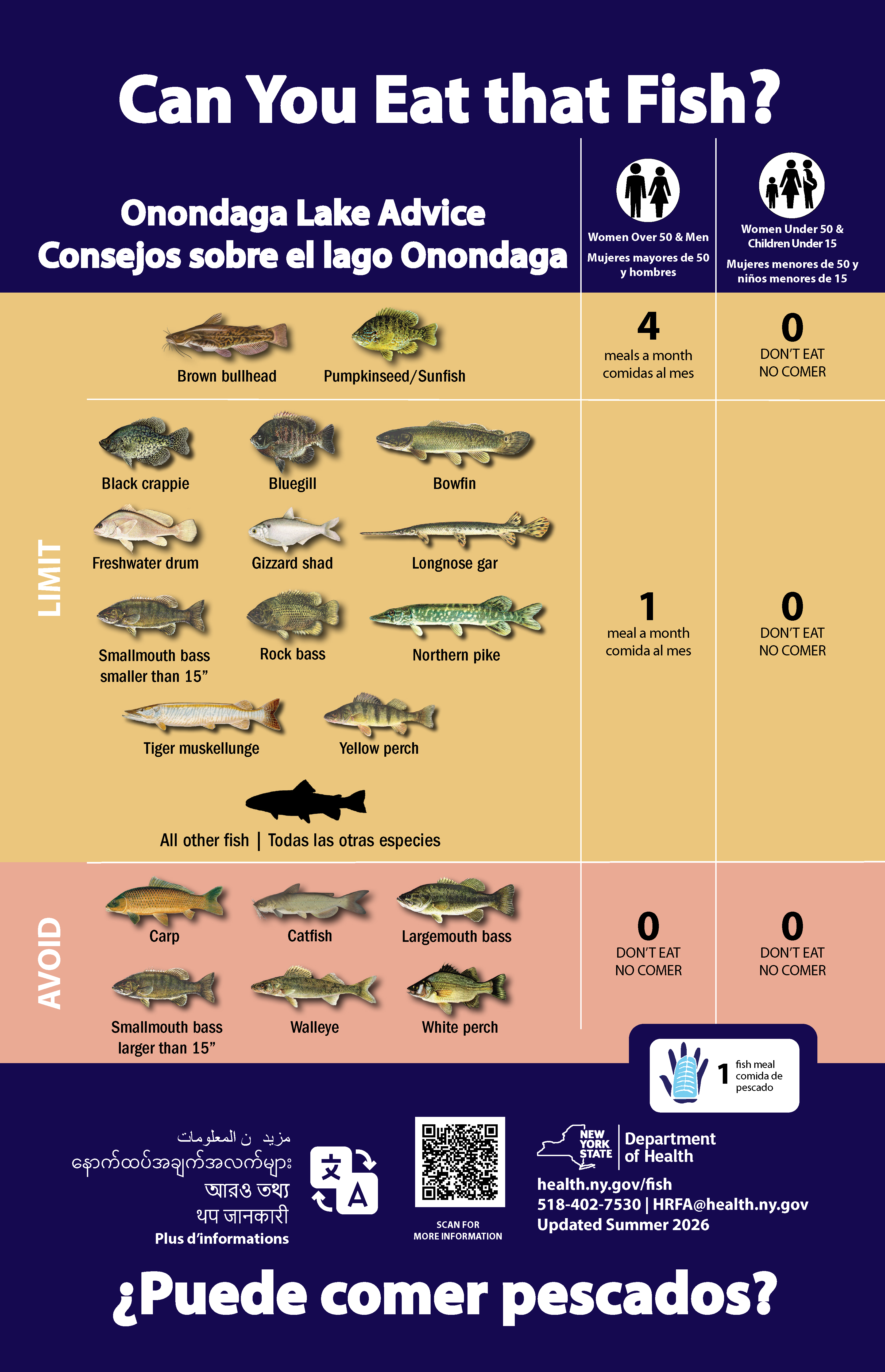
Click to view the Onondaga Lake advice in a table format
| Waterbody | Fish | General Population Advice | Sensitive Population Advice | |
|---|---|---|---|---|
| Onondaga Lake |  |
Yellow perch | Up to 1 meal/month | DON'T EAT |
 |
White perch | DON'T EAT | DON'T EAT | |
 |
Walleye | DON'T EAT | DON'T EAT | |
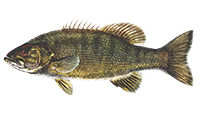 |
Smallmouth bass | Greater than 15", DON'T EAT; Less than 15", up to 1 meal/month |
DON'T EAT | |
 |
Pumpkinseed/sunfish | Up to 4 meals/month | DON'T EAT | |
 |
Largemouth bass | DON'T EAT | DON'T EAT | |
 |
Channel catfish | DON'T EAT | DON'T EAT | |
 |
Carp | DON'T EAT | DON'T EAT | |
 |
Brown bullhead | Up to 4 meals/month | DON'T EAT | |
| All other fish, including Black crappie, Bluegill, Bowfin, Freshwater drum, Gizzard shad, Longnose gar, Rock bass, Northern pike, and Tiger muskellunge. | Up to 1 meal/month | DON'T EAT |
PCB Levels are Highest In the Skin and Fat of Fish
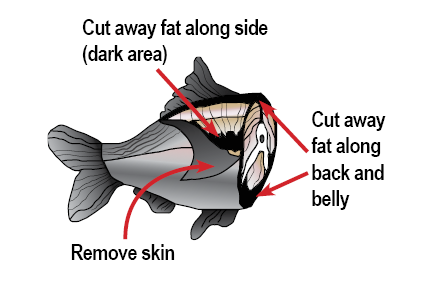
People who eat locally caught fish can reduce chemicals in a fish meal by
- Removing the skin
- Trimming off the dark fatty meat
- Broiling, grilling, or baking so the fat drips away. Avoid pan-frying.
Following these tips can help remove about 50% of the PCBs in a fish meal.
So Where Can I Eat the Fish?
The Finger Lakes Region has many great lakes, ponds, and rivers where it's healthy for the whole family to eat the fish. Visit our detailed county maps page to find public access fishing spots where everyone in the family can eat the fish they catch. Choose to eat fish from waters outlined in blue or purple and make sure to follow the recommended advisories.
There are several better choice waterbodies near Onondaga Lake. Instead of Onondaga Lake, consider eating fish from Oneida Lake, Skaneateles Lake, Otisco Lake, Cazenovia Lake, or Cross Lake.
Free Resources
Visit our Publications page to view available resources and order free materials.
Contact Us
Visit our program page to learn more about the New York State Fish Advisory Program.
For additional questions, call 518-402-7530 or email hrfa@health.ny.gov.
