Playground Safety
Translate this page into other languages:
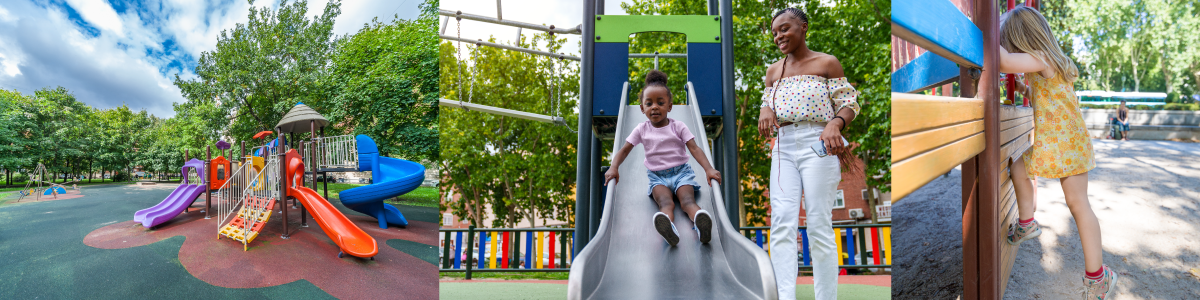
Playgrounds are great places for children to be physically active, spend time outdoors, and socialize with others. Follow these safety tips to help your child practice playground safety and protect them from injuries.
Playground Safety Tips
- Watch your child to make sure they are using playground equipment safely.
- Make sure children use age-appropriate equipment. Children younger than 2 should not climb higher than 2.5 feet and children ages 2 to 5 should not climb higher than 5 feet.
- Children should use slides, swings, and other playground equipment independently, not on the lap of an adult.
- Check that equipment is sturdy and in good physical shape. Look for signs of rust, chipped paint, and cracked, broken or sharp surfaces.
- Avoid playground equipment where your child’s head or body could get stuck. A child’s head can be trapped in openings 3.5 to 9 inches wide.
- Remove any drawstrings from clothes and make sure your child is not wearing necklaces, scarves, or a helmet while playing. Do not attach things like jump ropes, clotheslines, or pet leashes to playground equipment. Children can get strangled if tangled with these items.
- Check for ticks after playing in tall grass and wear long-sleeved shirts and long pants with socks tucked in to repel ticks.
- Apply sunscreen to your child regularly and provide them with lots of water to stay safe in the sun.
- On hot days, bring water to the playground, consider shorter periods of outdoor play and spend at least a few hours in air conditioning afterwards to avoid heat stroke.
- Pay attention to pesticide application signage and keep children and pets off of areas where they are applied until signs are removed.
Playground Hygiene
- Wash hands with soap and water after visiting the playground and before eating, especially after playing on rubber surfaces, and change clothes after playing outdoors. Use an alcohol-based hand sanitizer if unable to use soap and water.
- Take steps to ensure children are not putting hands or nonfood items in their mouths.
- Eat at a picnic area, such as a bench or table, or cover the eating area with a blanket.
Avoid Playground Risks
When choosing a playground, look for one with equipment that matches your child’s abilities and sizes. On extremely hot days, choose areas that are covered with shade and limit play time. Playground equipment like plastic and metal slides, and surface materials like rubber, can cause burns and other injuries.
Surface Materials
Areas under playground equipment should be soft surfaces that protect children from injuries if they fall. Concrete, asphalt, blacktop, grass, and dirt do not provide enough cushion. Safe surface materials include:
- Sand
- Pea gravel
- Undyed wood mulch or wood chips
- Rubber (shredded, recycled, or poured in place)
Playground Equipment
- Metal structures should be free of rust and peeling paint.
- Swing seats should be made of plastic or rubber. Avoid metal or wood.
- Avoid playground equipment with splintering wood. Wooden playground structures built before 2004 may have used chromated copper arsenate (CCA) to preserve the wood. This preservative contains a cancer-causing chemical which can leave the wood and get into children. Such wood needs to be resealed every year to be safe.
Reduce Risks of Lead Poisoning
Lead is extremely dangerous to children and adults. It is highly toxic to young children and can cause life-long health effects on brain development and ability to learn. Most often, children get lead poisoned from swallowing or breathing in dust from pealing and chipping lead paint in older homes, but lead can also be found in soils and other playground surfaces.
- Choose play areas that are well maintained and provide good cover with materials like grass, landscape fabric or mulch. A well-maintained grass cover provides an excellent barrier that prevents dust and dirt from getting on clothing and hands, and from being swallowed.
- Avoid playground equipment with rust or peeling paint.
- Supervise your child to reduce their hand-to-mouth contact with soil and peeling paint and keep nonfood items out of their mouths.
