Alpha-gal Syndrome (AGS) for Providers
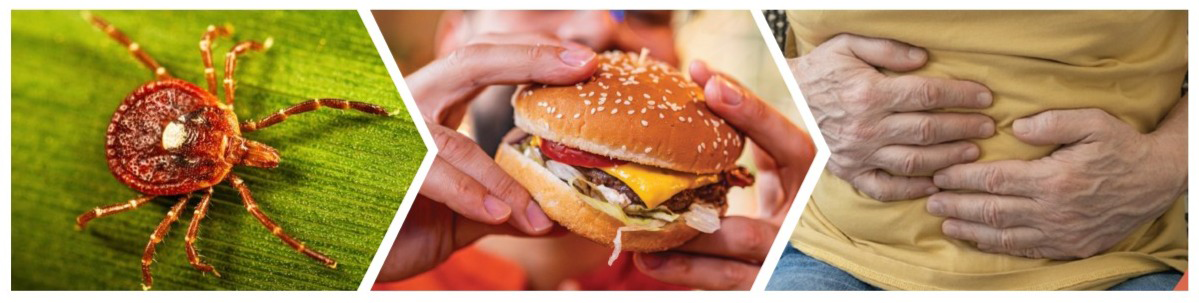
(Images courtesy of CDC)
- Alpha-gal Syndrome (AGS) is an emerging allergic condition characterized by IgE-mediated hypersensitivity to alpha-gal (galactose-alpha-1,3-galactose).
- Alpha-gal is a sugar molecule found in non-primate mammalian meat, mammalian products, and tick saliva.
- AGS is primarily associated with lone star tick (Amblyomma americanum) bites, but bites from other types of ticks might also cause AGS.
- Other names for AGS include mammalian meat allergy, alpha-gal allergy, red meat allergy, and tick bite meat allergy.
- While symptoms can range from mild to severe, AGS is a serious and potentially lifelong condition that can occur after a tick bite, even if the tick is removed promptly. Therefore, prevention is extremely important.
- Though symptoms can decrease over time in some individuals, there is no cure for AGS, so early identification and preventive efforts are extremely important.
Clinical presentation
- Delayed symptoms are a hallmark of AGS. Acute AGS symptoms generally appear 2-6 hours after consuming foods with alpha-gal or exposure to other products containing alpha-gal.
- Clinical presentation of AGS is broad and varies among patients, ranging from mild to severe.
- Rash, hives, and gastrointestinal symptoms are the most common AGS symptoms.
- Hypotension, dizziness, and faintness/syncope indicate a severe AGS reaction.
AGS symptoms include:
- Rash or hives
- Gastrointestinal symptoms (such as stomach pain, nausea, vomiting, diarrhea, heartburn, and indigestion)
- Swelling of the lips, throat, tongue, or eyelids
- Cough, shortness of breath, wheezing, and difficulty breathing
Severe AGS symptoms include:
- Severe stomach pain
- Hypotension, dizziness, and faintness/syncope
- Anaphylaxis
Diagnosis & testing
- Diagnosis of AGS is nuanced and requires a combination of a detailed patient history, physical examination, and alpha-gal-specific IgE antibody testing. Each of these alone is not sufficient to make an AGS diagnosis.
- A patient who does not have AGS may still have a positive alpha-gal-specific IgE antibody test.
- As with other allergic conditions (e.g., peanut allergies), if you suspect your patient has AGS, consider referring them to an allergy specialist familiar with AGS for diagnosis and management.
Case studies
Given that a positive alpha-gal-specific IgE antibody test may occur in someone without AGS (known as sensitization), diagnoses should not be made using IgE tests alone. Several case studies where AGS diagnoses were considered are detailed below:
- A patient had delayed symptoms of severe abdominal pain, head congestion, itchy eyes and throat, and rhinorrhea following consumption of mammalian meat at a barbeque. The patient had a high positive alpha-gal-specific IgE antibody test.
Final Diagnosis: AGS. - A patient had a low positive alpha-gal-specific IgE antibody test with gastrointestinal (GI) symptoms. The patient avoided foods and products containing alpha-gal, but their GI symptoms did not improve.
Final Diagnosis: Not AGS. - A patient had a low positive alpha-gal-specific IgE antibody test and a chronic, pruritic, non-urticarial rash that did not improve after they stopped eating meat and dairy.
Final Diagnosis: Not AGS. - A patient had a high positive alpha-gal-specific IgE antibody test but had not experienced any allergy symptoms after eating mammalian meat.
Final Diagnosis: Not AGS.
Management
- Patients should receive personalized guidance on management of AGS from an allergy specialist or qualified health care provider.
- Patients with AGS should avoid mammalian meat (like beef, pork, rabbit, lamb, and venison).
- Patients with AGS should potentially avoid mammalian meat products (including gelatin and milk products).
- Very rarely, some patients with AGS may need to avoid other products with alpha-gal. A comprehensive list can be found within CDC's Fast Facts: Products That May Contain Alpha-gal.
- People with AGS can still eat meat that does not contain alpha-gal, such as poultry and fish.
- Some evidence suggests that in the absence of repeated tick-bite exposures, alpha-gal-specific IgE antibodies may decrease over time in patients, allowing them to consume food with alpha-gal without having an allergic reaction.
Surveillance and reporting
- AGS is not nationally notifiable, but some states and other jurisdictions have made it reportable.
- A national surveillance case definition for AGS was developed in 2022.
- AGS laboratory testing is reportable in New York City (NYC) but is not currently reportable in New York State outside of NYC.
Prevention
- The best way for a patient to prevent AGS is to prevent tick bites.
- Tick bite prevention measures can be found at Prevention & Tick Removal
